72 hr
Ha Giang Loop: 3-Day Motorbike Adventure
- Expert local guide
- Small group
- Skip-the-line access
- Free cancellation
3 Day 2 Night Ha Giang Loop Tour — Easy Rider & Self-Drive Departures
Limestone passes at first light, woodsmoke and homestay rice by dark.
Compare fares, pick the fit — all bookings are mobile-voucher and eligible for free cancellation where shown.
72 hr
72 hr
120 hr
Selecting a 3 day 2 night ha giang loop tour provides a comprehensive way to explore the mountain passes and ethnic villages of Northern Vietnam. Choosing between self-drive and guided transport modes ensures your adventure aligns with your riding experience and comfort level.
| Self-Drive Standard Motorbike |
Top pick Easy Rider Guided Motorcycle |
Private Jeep Full Support | |
|---|---|---|---|
| Driving Responsibility | You operate the motorbike | Local guide drives you | Professional driver included |
| License Required | Motorcycle license + IDP | Not required | Not required |
| Navigation | Self-navigated routes | Expert-led group | Custom itinerary support |
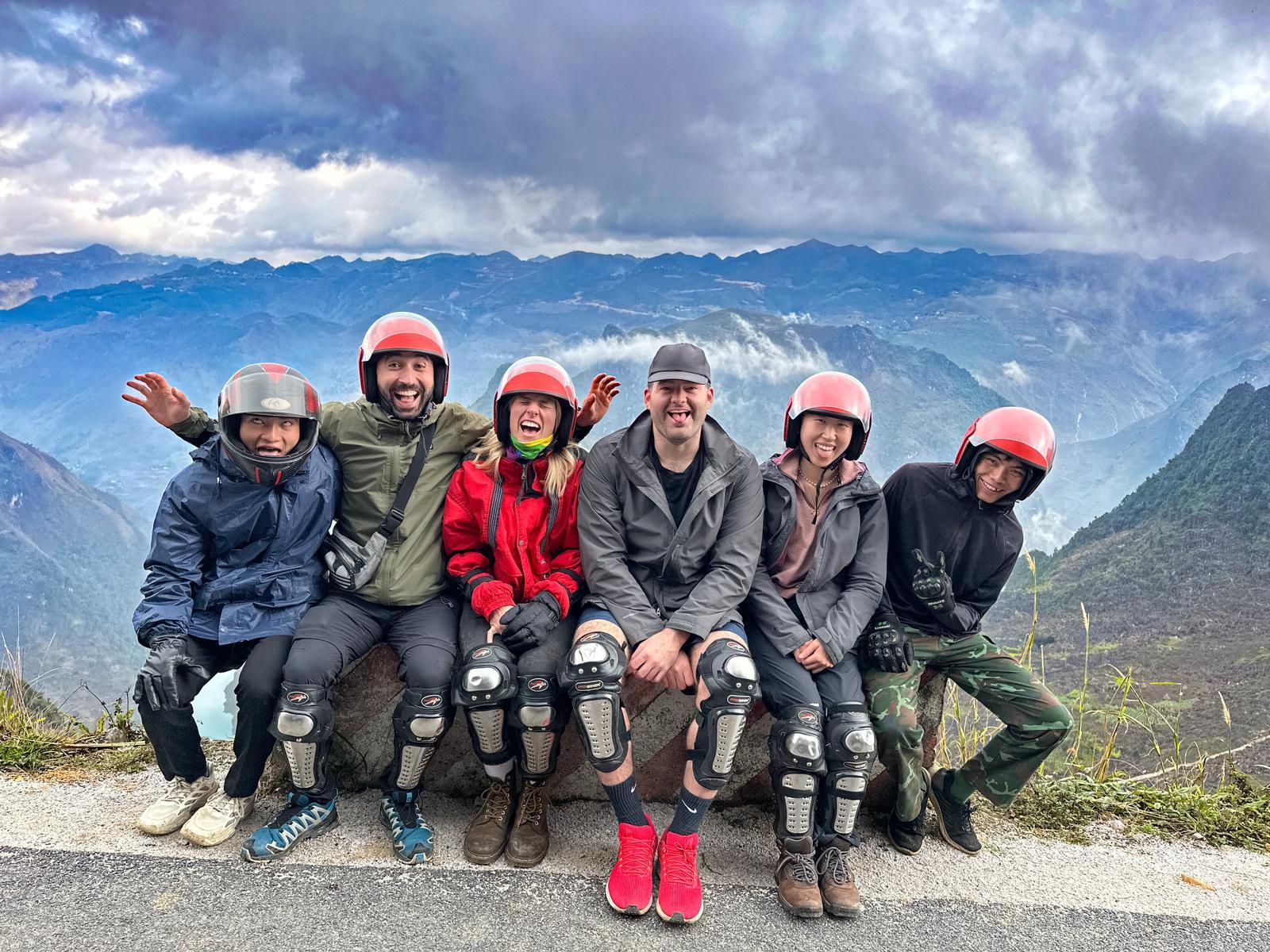
| Safety Equipment | Your own gear | Included helmet/guards | Not applicable |
| Best for | Experienced riders | First-timers | Comfort-focused travelers |
| See tickets & prices |
Verdict: For the typical first-time visitor, the Easy Rider 3 day 2 night ha giang loop tour offers the safest and most immersive experience.
Worth it for riders wanting guided access
The road itself costs nothing — entrance to the loop is 0 VND, open 24/7, with only individual attractions charging separately. So what you're actually paying an operator for is a bike, a rider or guide, homestay beds, meals and the logistics of Ma Pi Leng Pass, Tham Ma's switchbacks and the Nho Que River viewpoints. A 3 day 2 night ha giang loop tour buys competence on roads where fog, gravel and loaded trucks punish inexperience, and gets you into Hmong and Tay villages you'd otherwise ride straight past. Check the live grid: options run from the 3-Day Motorbike Adventure to the Easy Rider and Expert Rider versions, plus a 4-Day Homestay variant. It pays off if you can't handle a manual bike on mountain passes, or want company. Confident solo riders renting independently get the same karst scenery for less.
Bottom line: Book the 3 day 2 night ha giang loop tour if you want the Dong Van karst passes without gambling on your own clutch control — otherwise rent and ride it yourself.
They complement each other; most visitors who do both call the Ha Giang Loop the more thrilling, while Sapa is often considered the more restorative choice for nature lovers.
|
Top pick Ha Giang Loop |
Sapa Trekking | |
|---|---|---|
| Primary Activity | Motorbike/Jeep touring | Guided mountain trekking |
| Landscape style | Rugged limestone peaks | Terraced rice fields |
| Intensity | Moderate to high | Low to moderate |
| Cultural focus | Remote village immersion | Ethnic minority markets |
| Best for | Adventure seekers | Families and hikers |
| Average duration | 3–4 days | 2–5 days |
| Start point | Ha Giang City | Sapa Town |
| See tickets & prices |
Verdict: Choose the 3 day 2 night ha giang loop tour if you crave adrenaline and raw, dramatic mountain vistas, or opt for Sapa if you prefer a slower pace with established walking trails and lush green scenery.
Hand-picked experiences loved by thousands of travelers
4 days
Free Cancellation
Four-day guided motorcycle journey through mountain passes, ethnic villages, and stunning landscapes
3 days
Free Cancellation
Ride through Vietnam's dramatic northern highlands with local guides, waterfalls, and homestay evenings
3 days
Free Cancellation
Three-day mountain journey through northern Vietnam's dramatic karst landscapes with expert drivers
3 days
Free Cancellation
Ride Vietnam's most spectacular mountain roads with overnight stays in Dong Van town and a rural homestay
3 days
Free Cancellation
Journey through Vietnam's stunning northern landscapes with a personal guide and experienced driver
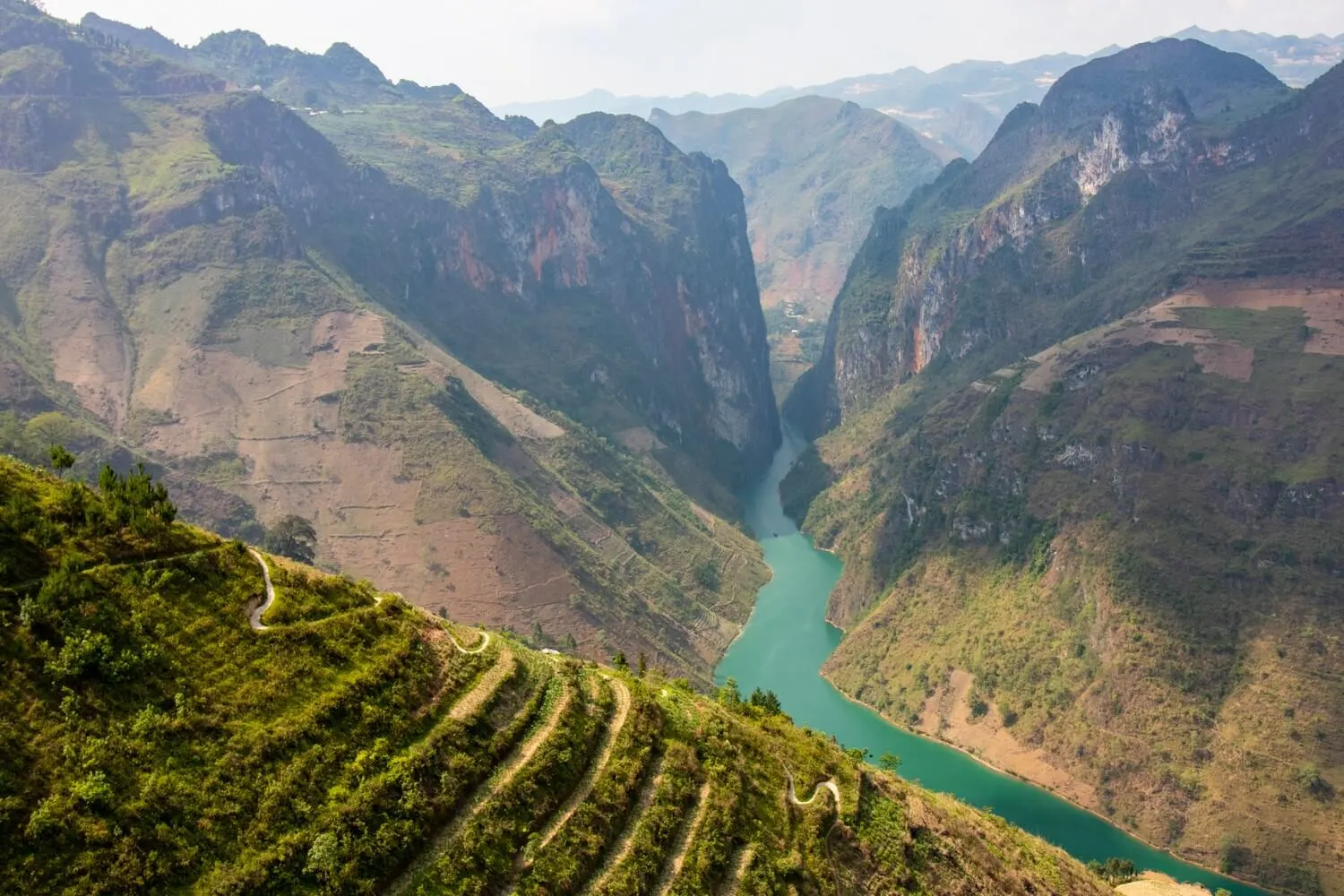
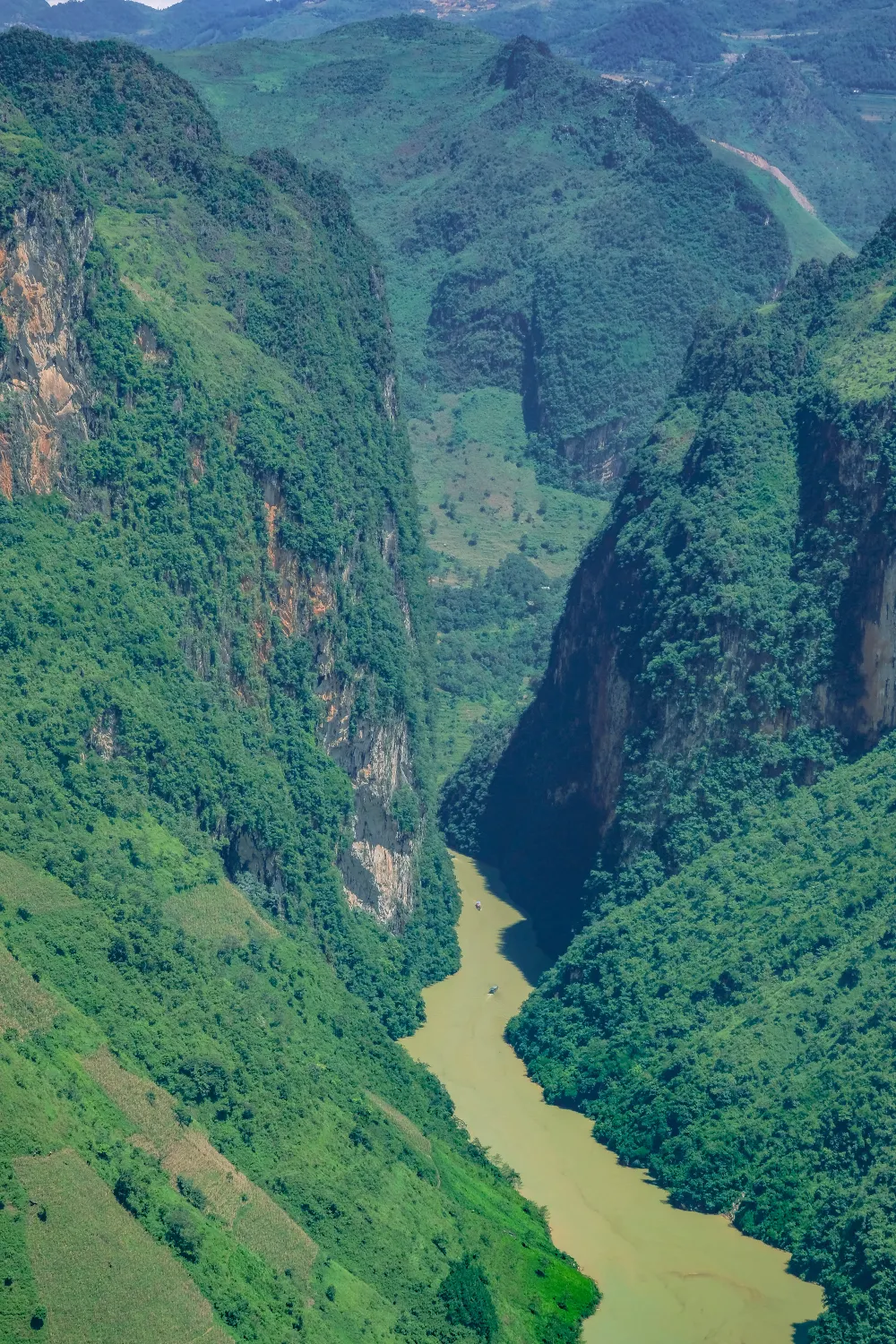
A legendary pass with limestone cliffs and dramatic drops overlooking the Nho Que River.
A UNESCO-recognized park featuring limestone formations and deep canyons dating back millions of years.
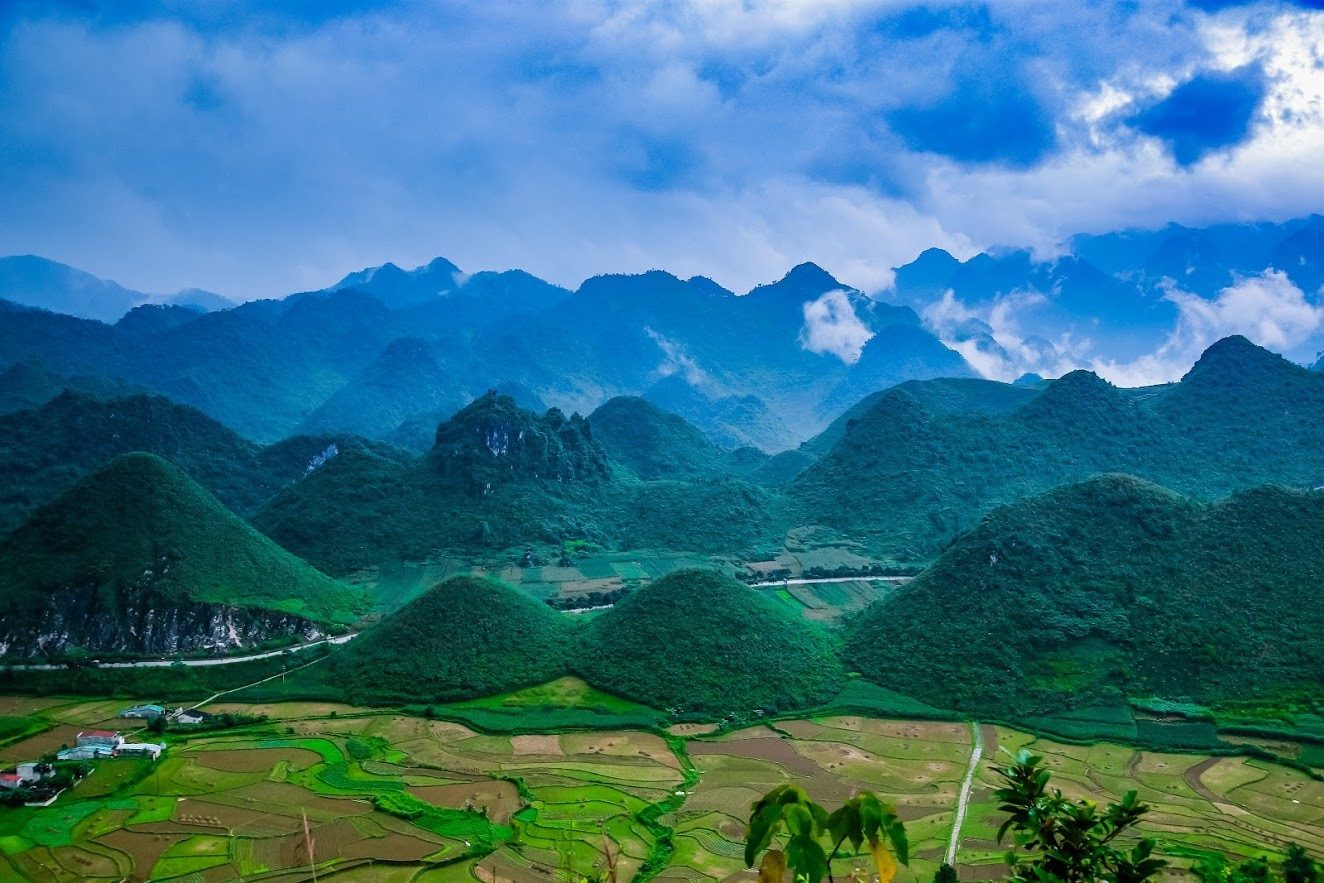
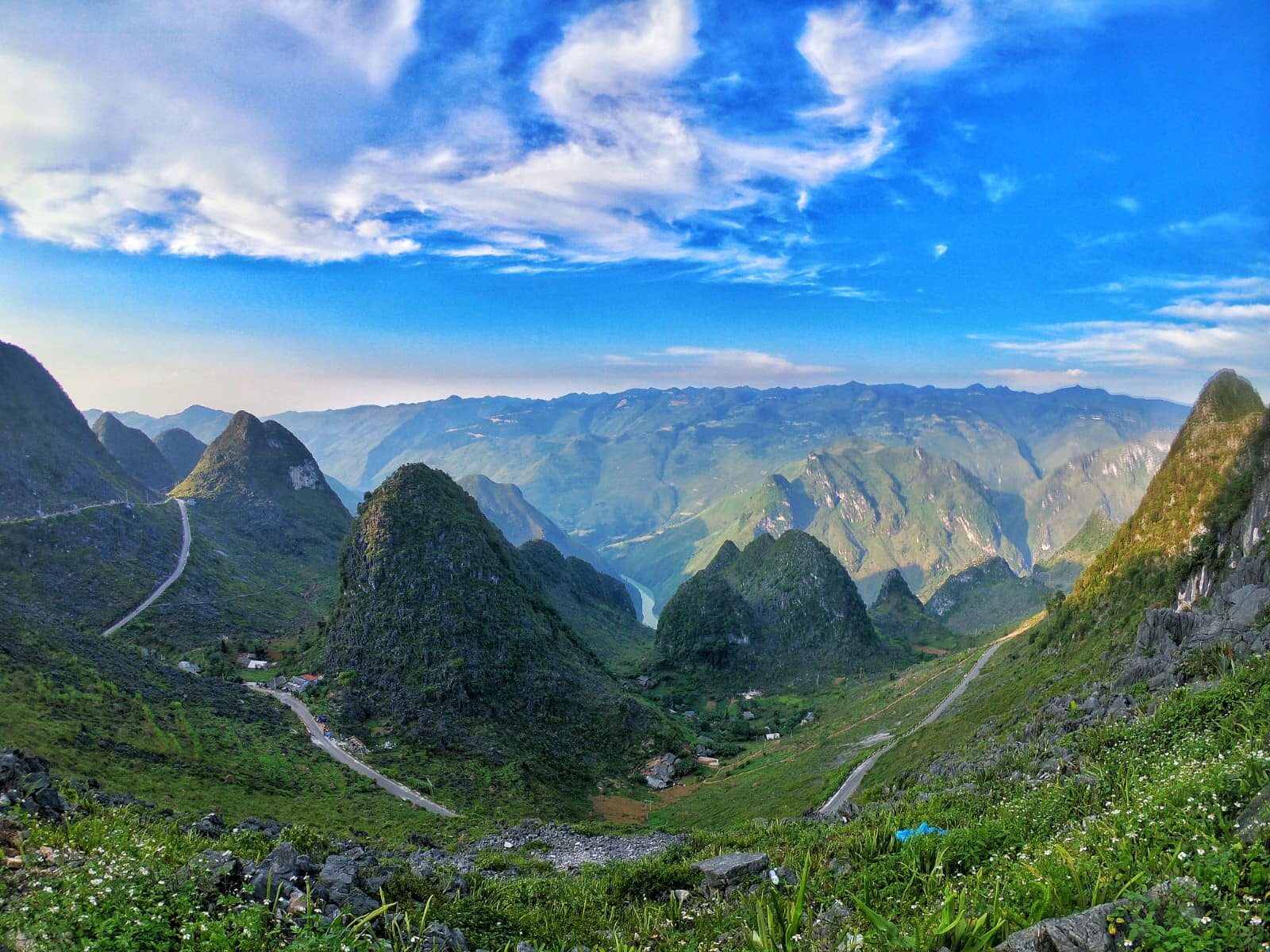
The mountain saddle serving as the gateway to the plateau with panoramic views of the Twin Mountains.
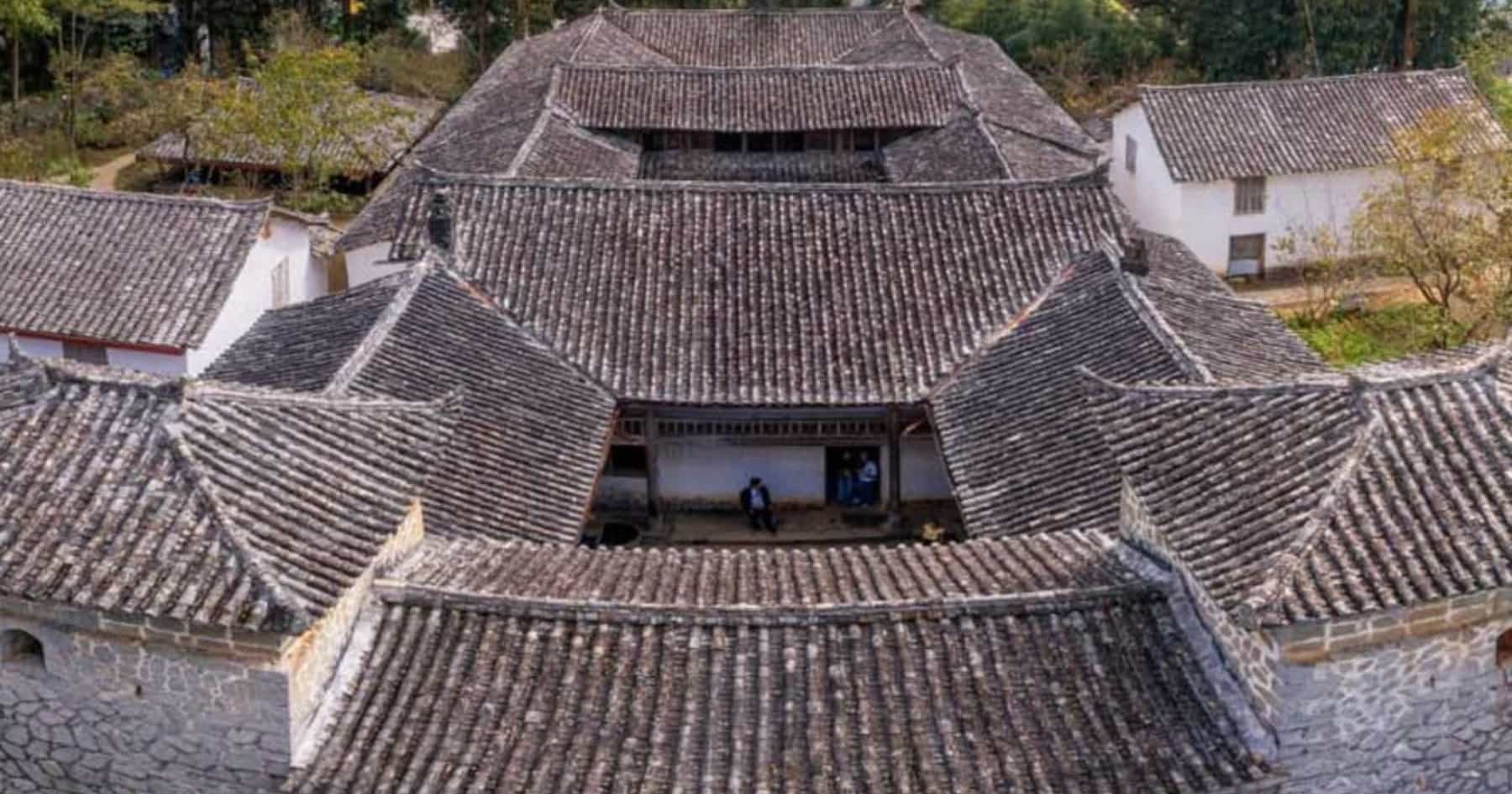
A historic residence showcasing traditional architecture and the influence of H'mong leadership in the region.
The deepest canyon in Southeast Asia, accessible via boat from the bottom of the pass.
You arrive in Ha Giang City off the overnight bus, hand over your main luggage, and keep one small bag strapped behind the seat. Best arrival window is 07:00–17:00 — daylight is essential for navigating mountain passes safely and enjoying the scenery.
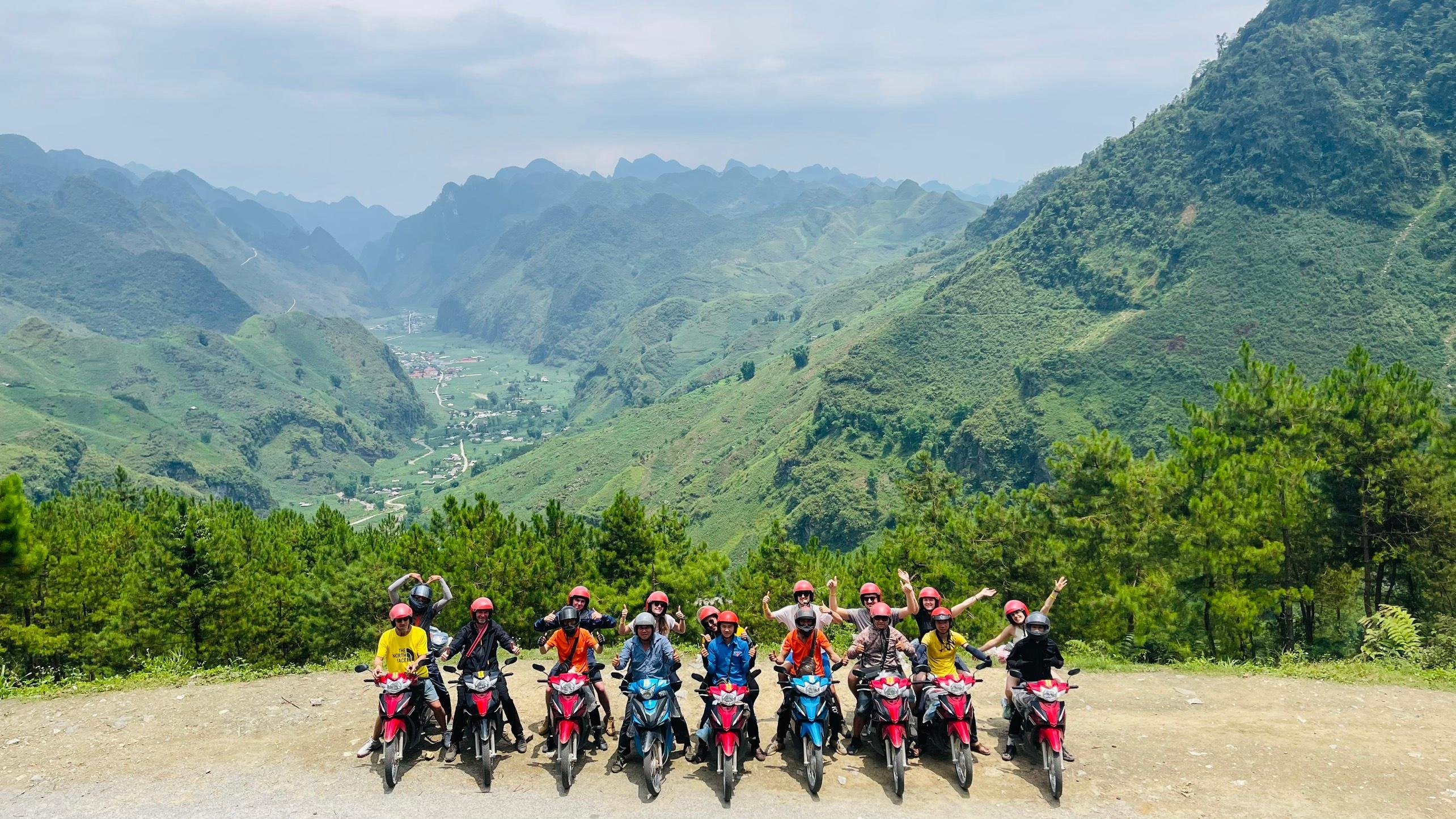
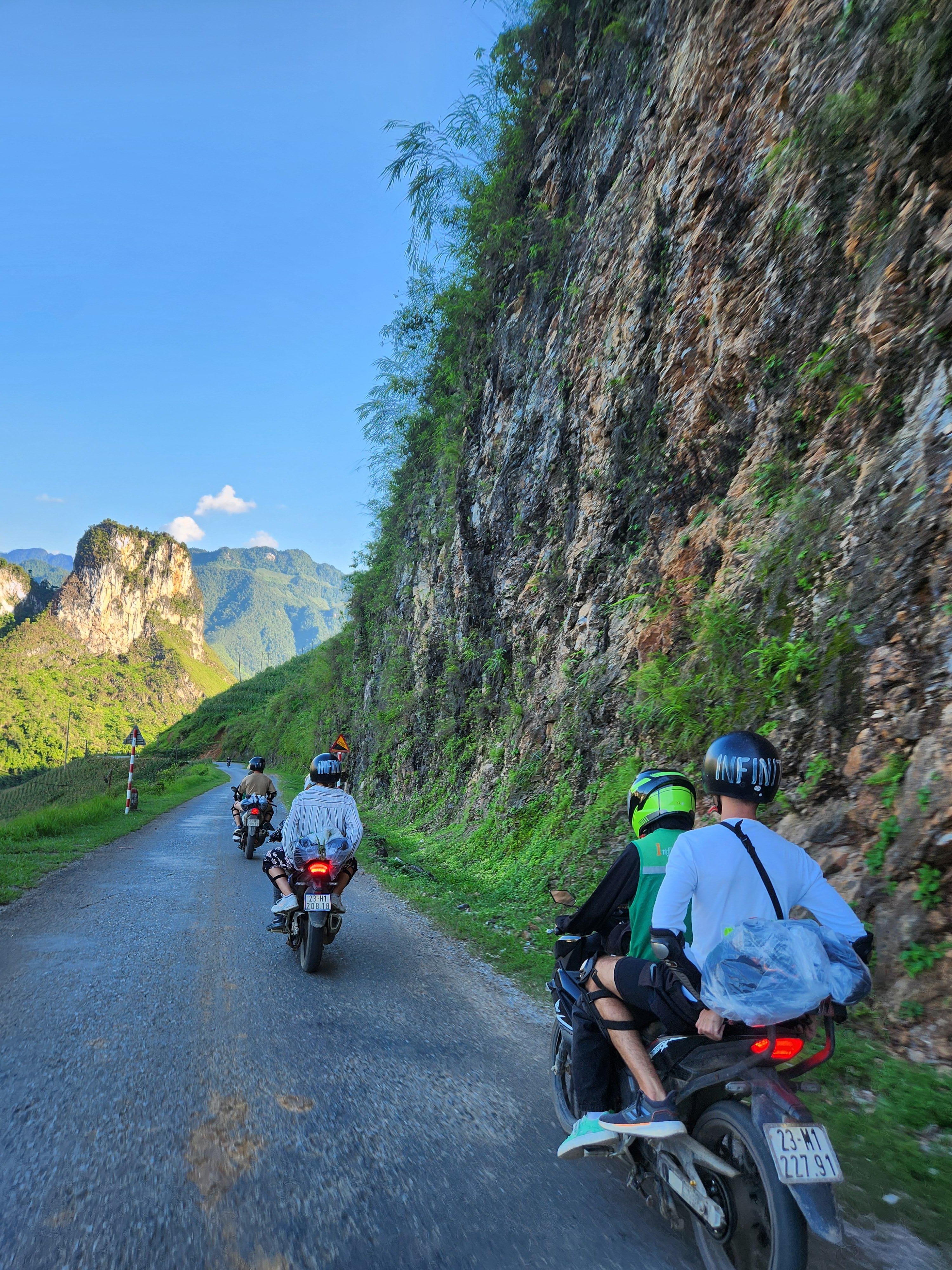
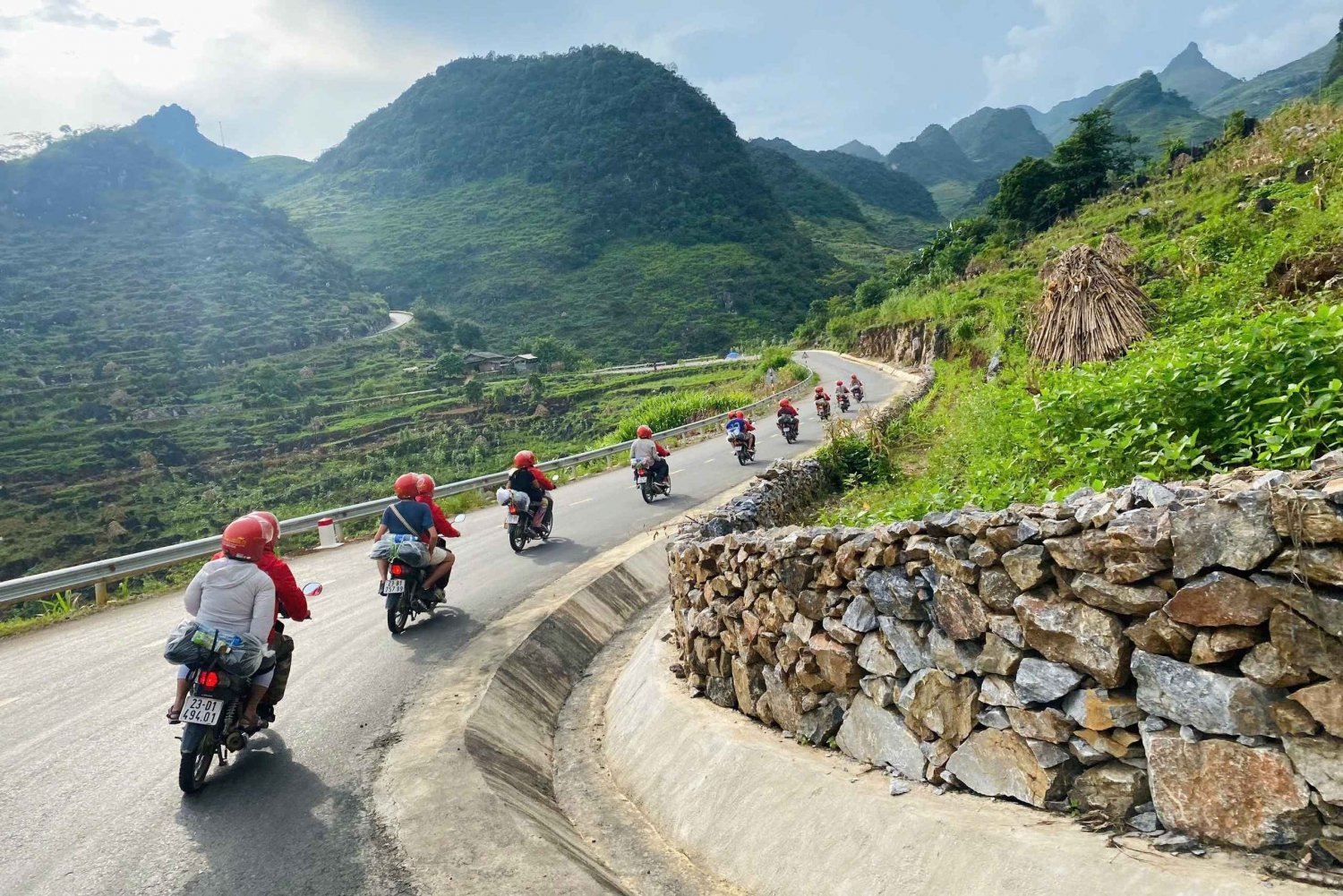
Your rider runs through the brake feel and the horn, and you leave town in a loose convoy.
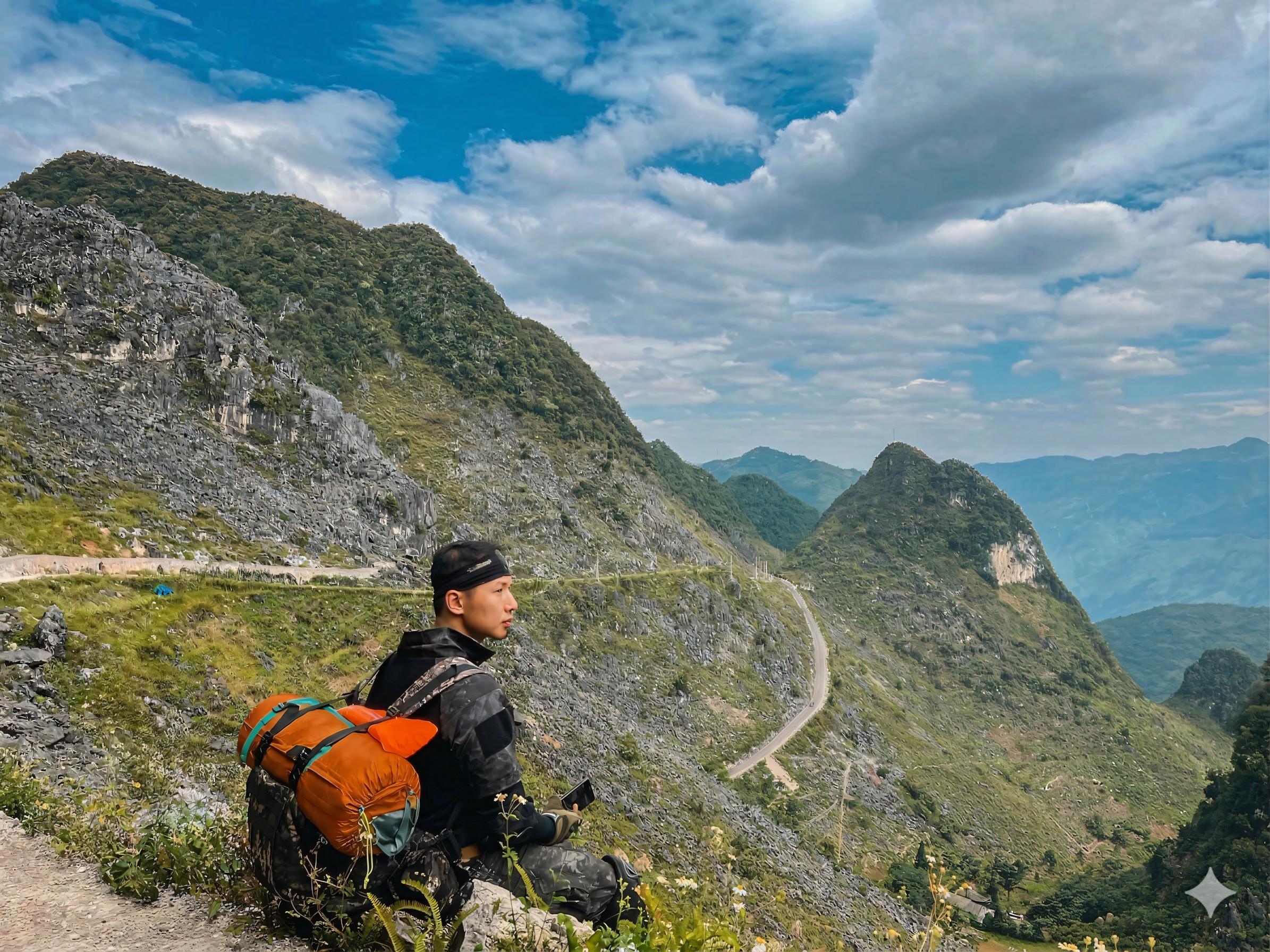
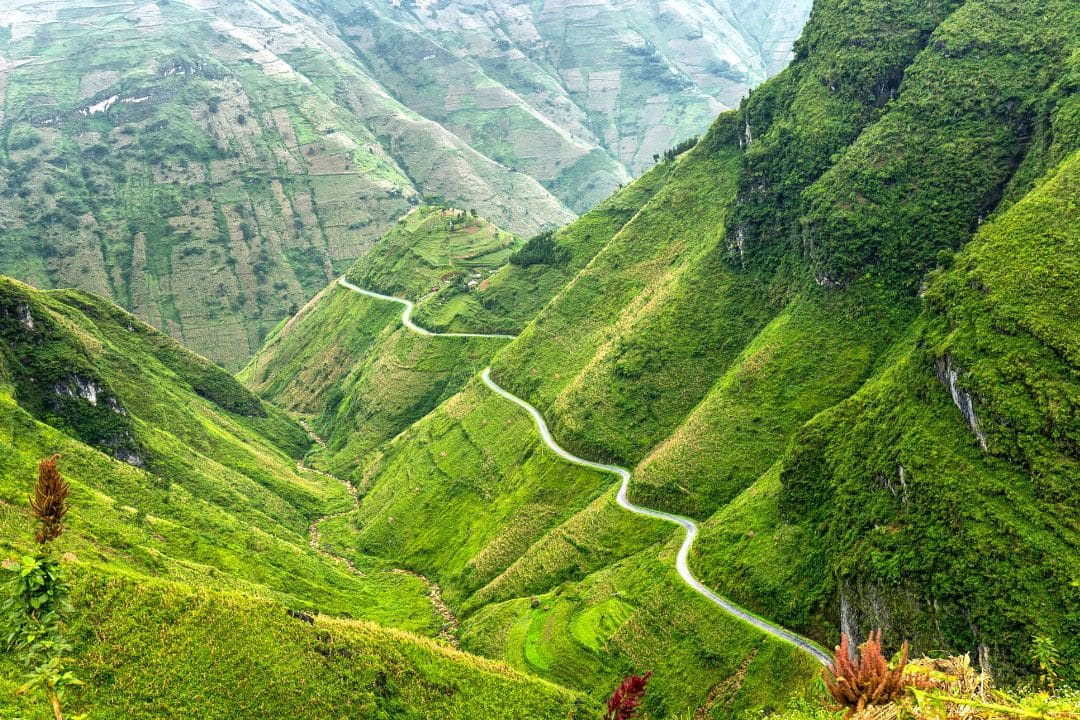
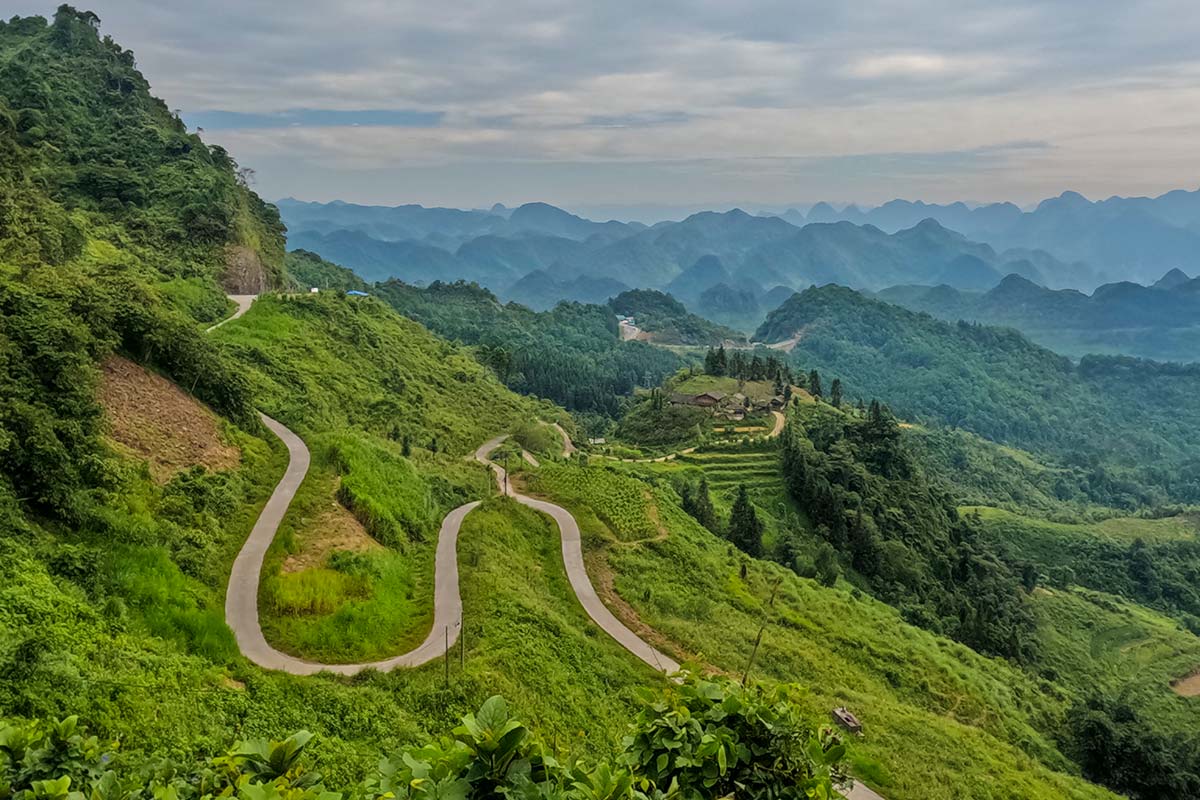
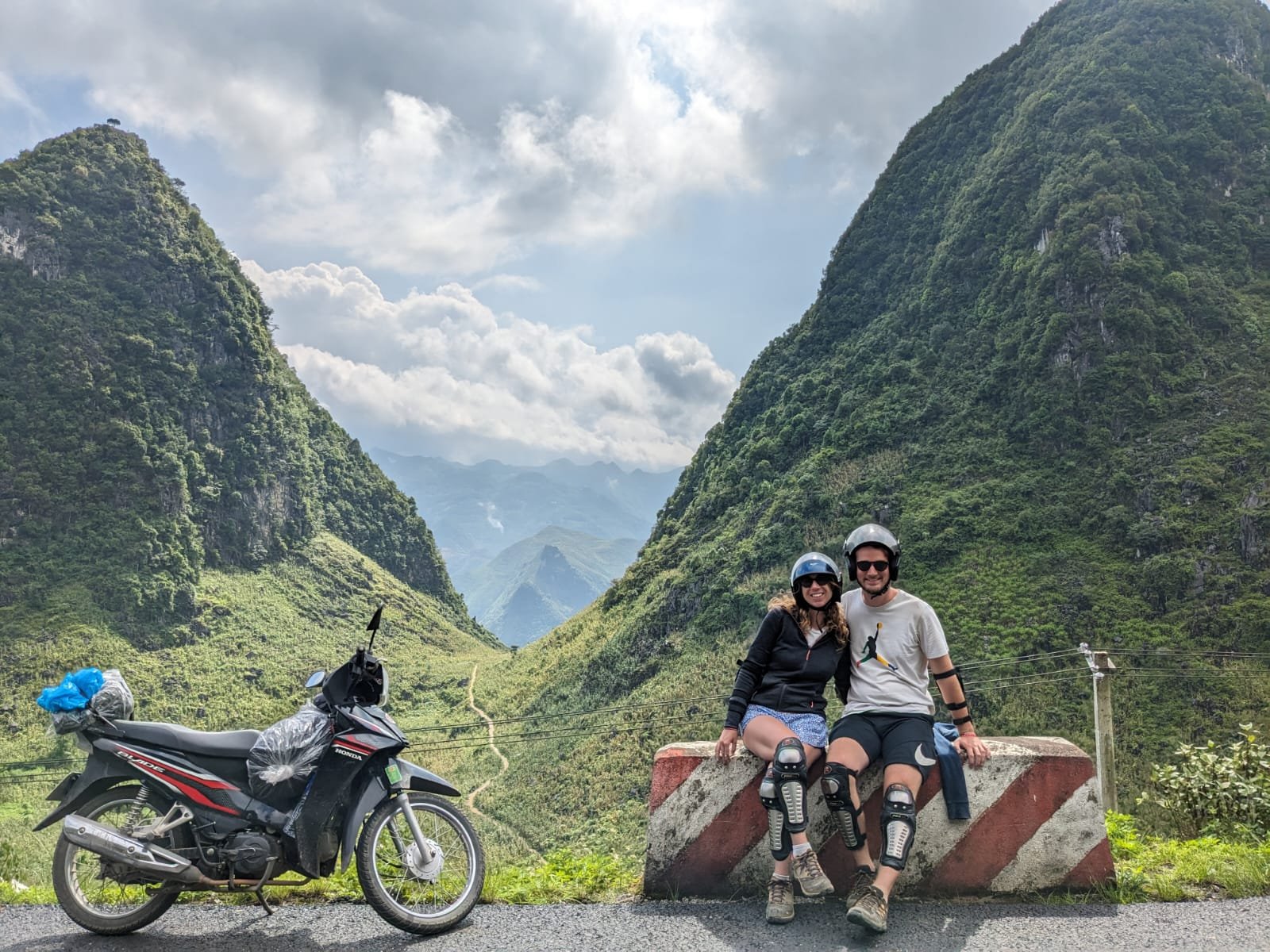
The first climb is Bac Sum. You lean into forty-odd hairpins, then stop at the Quan Ba viewpoint where the twin conical hills sit in the valley floor. Lunch is in Yen Minh under pines. By late afternoon the limestone turns sharp and grey, and you pull into a stilt-house homestay to wash off the road dust and eat at a low table with the group.
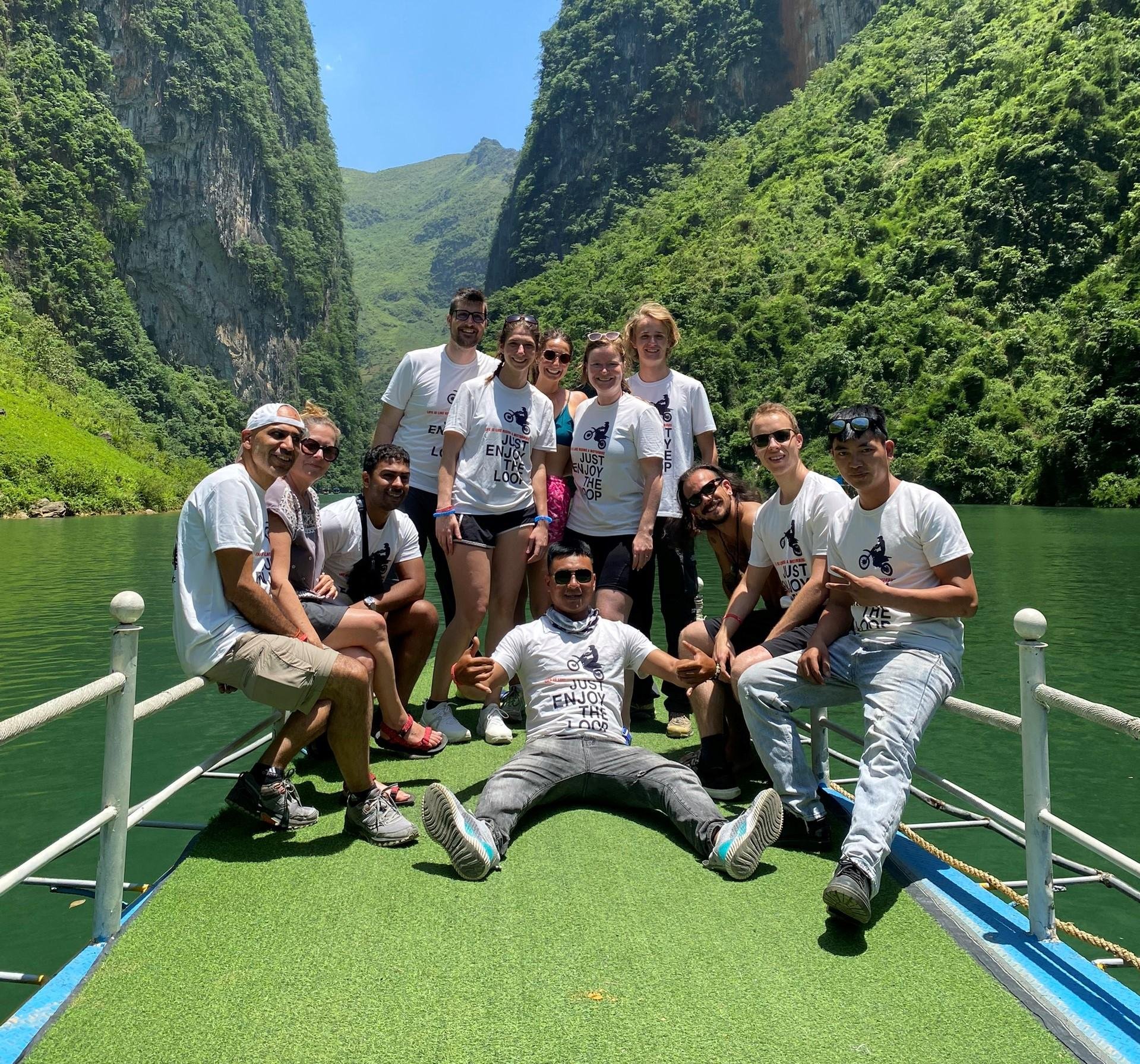
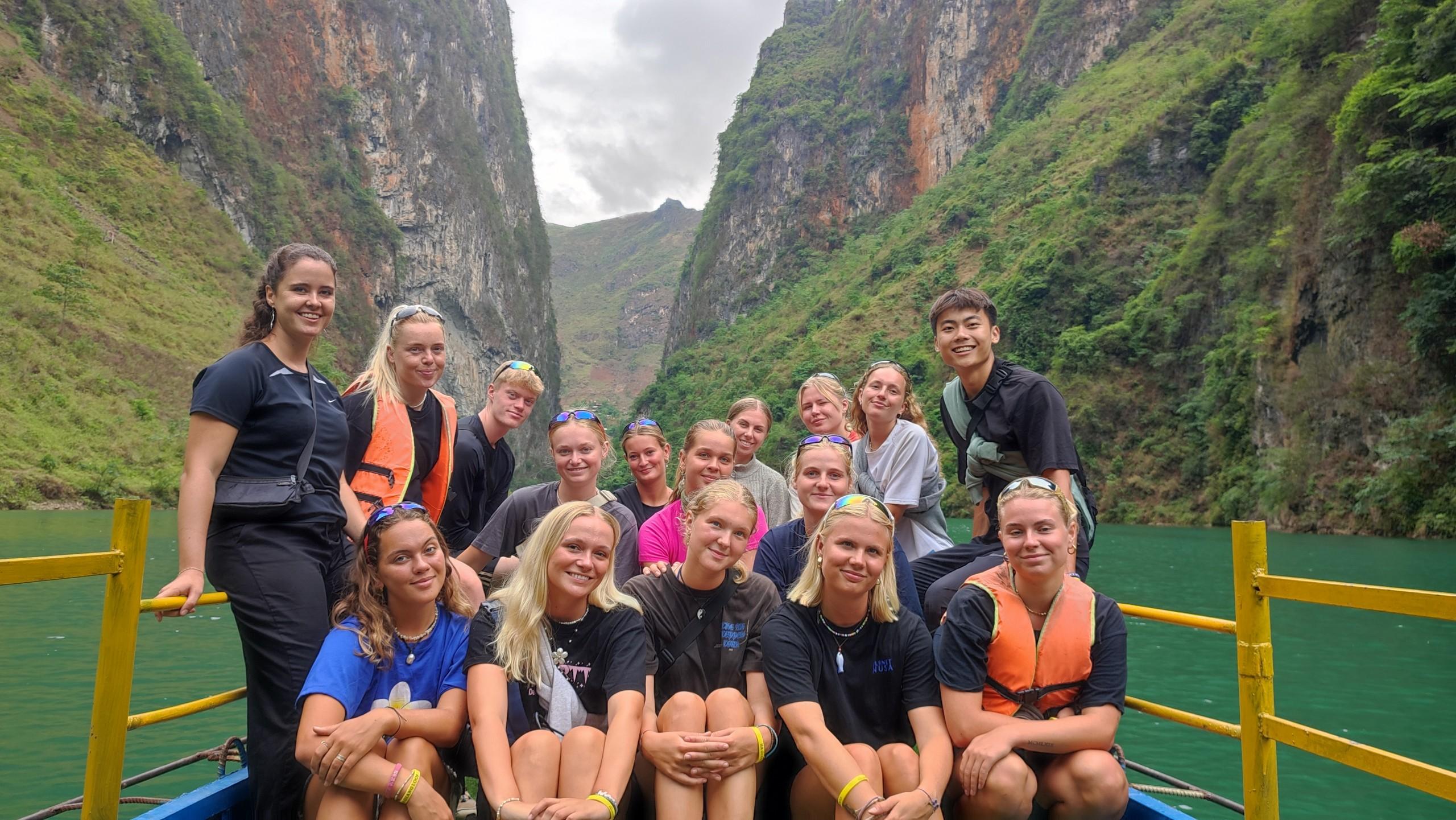
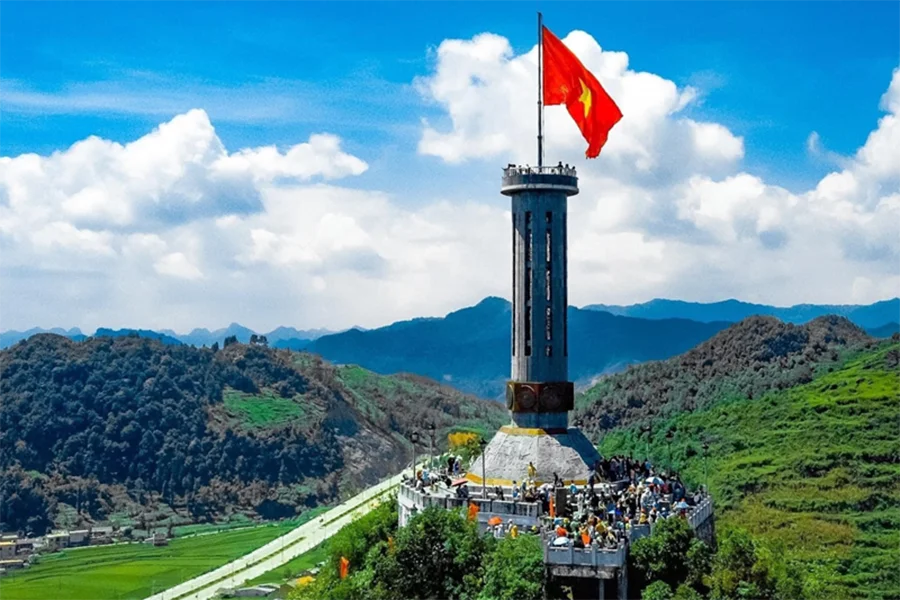
Day two is the one you came for. You ride to the Vuong palace at Sa Phin, walk its three courtyards, then push north to the Lung Cu flag tower and climb 389 steps to the base. Ma Pi Leng comes after Dong Van: you park at the Skywalk, walk out onto the rock shelf, and look 800 metres down to the Nho Que. Some groups swap the bike for a boat through Tu San canyon.
On the third morning of your 3 day 2 night ha giang loop tour, you loop back through Du Gia, stop at the waterfall, and reach Ha Giang by mid-afternoon.
All the details about your upcoming adventure in one place
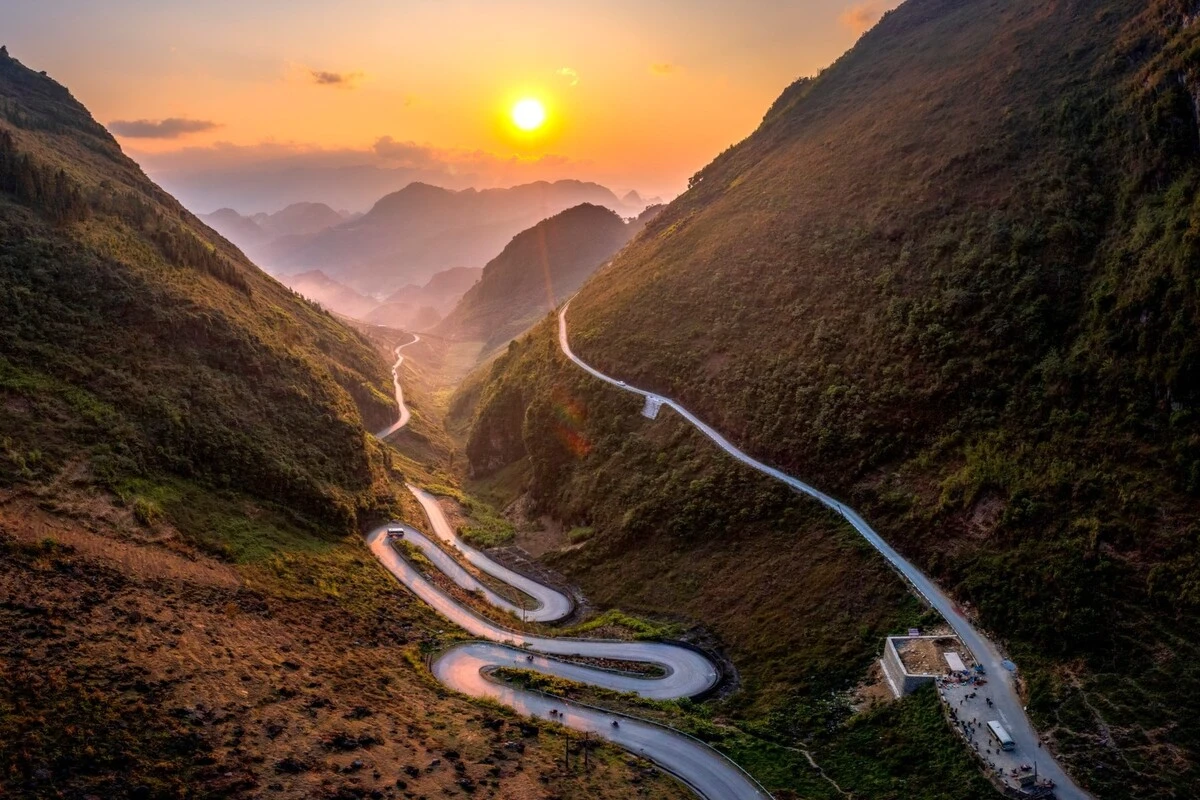
The road that carries every 3 day 2 night ha giang loop tour was cut largely by hand. Between 1959 and 1965, some 1,300 young volunteers from sixteen ethnic groups chiselled the Happiness Road along the cliffs above the Nho Que River, working suspended on ropes with hammers and chisels.
The Ma Pi Leng section alone took eleven months. Its name translates roughly as the bridge of a horse's nose — the pitch at which a horse would refuse to climb.
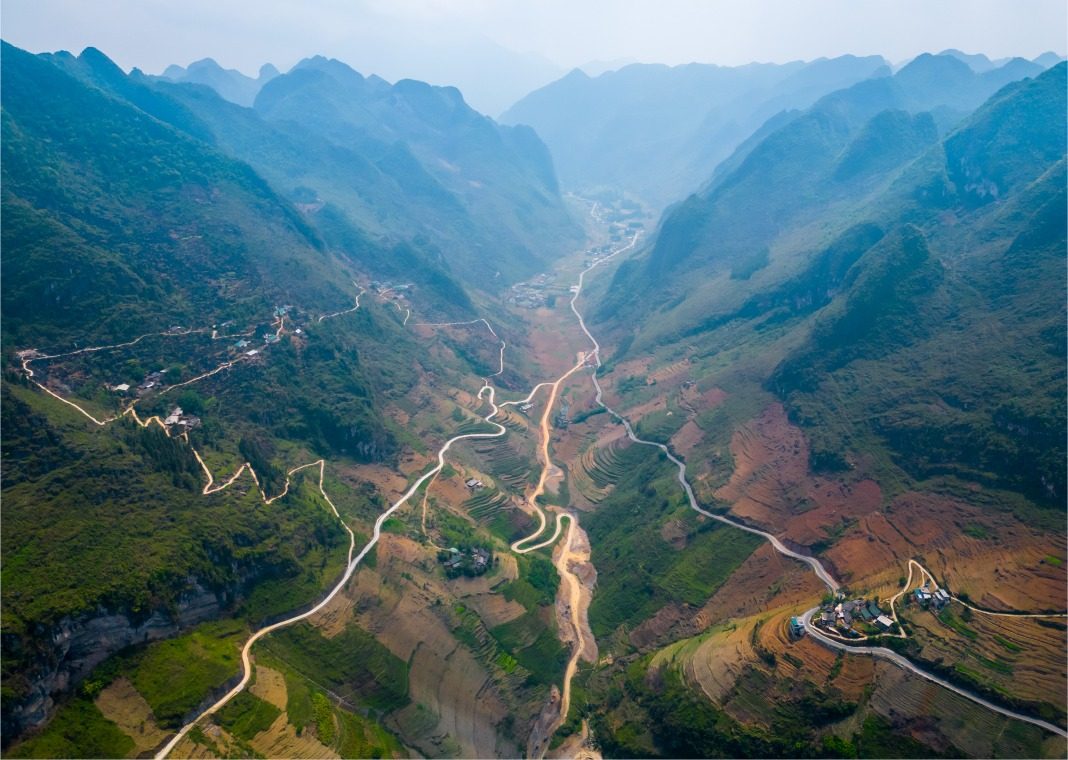
What they opened is now the spine of the Dong Van Karst Plateau UNESCO Global Geopark, gazetted in 2010 and covering roughly 2,350 square kilometres of grey limestone. The rock is Devonian and Carboniferous, folded into fins and cones. Farmers plant maize in cracks between the stone. Water is the scarcity, not soil; villages depend on rainwater tanks through the dry months.
The circuit matters today for reasons beyond scenery. It is one of the few routes in Vietnam where the state has not smoothed the cultural texture away. Hmong, Tay, Dao, Lo Lo and Giay communities live along it, and the Sunday markets at Meo Vac and Dong Van remain trading events rather than performances. The Vuong family palace at Sa Phin, completed in 1919, is built of pine and stone in a Chinese-influenced plan, its courtyards fringed with opium-poppy motifs carved into the pillar bases — a plain record of how the family financed it. Lung Cu flag tower marks the country's northernmost point at 1,470 metres.
A Ha Giang Loop motorbike tour is a modern accommodation to older logistics. The road is public and free to use: entrance is 0 VND, with specific attractions on the loop charging separately. Most riders reach Ha Giang City by overnight sleeper bus from Hanoi, then run the circuit north through Quan Ba's twin hills, Yen Minh's pine belt and Dong Van's old quarter before the Ma Pi Leng traverse to Meo Vac. Easy-rider services exist because the switchbacks are unforgiving of inexperience; gravel, fog and cargo trucks are constant. Homestays in Du Gia and Lung Tam absorb the overnight load.
The 3 day 2 night ha giang loop tour condenses roughly 350 kilometres into a workable arc, and the plateau's scale still resists it. Cloud fills the valleys below the pass most mornings. The river runs jade green, 800 metres down.
The Happiness Road was cut by hand, by workers hanging on ropes above the Nho Que River.
Wear layers, sturdy closed shoes, and protective gear suitable for high altitudes and winding mountain roads. A light rain shell is recommended even in summer.
Keep luggage minimal as space on motorbikes is restricted to small racks. Most tour operators provide storage in Ha Giang City for your main suitcases.
Always prioritize safety over capturing the shot while on mountain passes. Use caution when stopping at unofficial viewpoints along the Ha Giang Loop.
Not recommended for small children due to long daily riding hours, steep terrain, and limited safety infrastructure. Adult supervision and experienced drivers are essential for any group.
The route consists of winding mountain roads and is not accessible via standard public transport. Physical mobility is required for mounting motorbikes or traversing rocky paths.
Bring sufficient water for the journey between mountain villages. Local homestays provide communal dinners featuring regional specialties.
Opening Hours
00:00–23:59 daily
Address
Ha Giang Province, Northern Vietnam
Accessibility
Motorbike or vehicle dependent
Best arrival window
07:00–17:00
Route
350km circular loop
Tours often require cancellation at least 7 days prior for a full refund. The road itself remains open 24/7 with 0 VND access fees.
Recommended time
3 days
Completing a 3 day 2 night ha giang loop tour requires careful pacing to navigate the mountain passes during daylight hours. Most travelers find that managing fatigue is essential when tackling these Northern Vietnam landmarks, so keeping daily transit under six hours remains a priority. Following these 3 day 2 night ha giang loop tour tours allows for steady progress, though popular mountain viewpoints often see higher concentrations of riders around midday. Please note that no 3 day 2 night ha giang loop tour tickets are required for road access, as the route is open 00:00–23:59 daily.
Crowd levels through the day
The road came before the tourism. In September 1959, the Democratic Republic of Vietnam began cutting a route north from Ha Giang town toward Dong Van and Meo Vac. Some 1,300 young volunteers, drawn from the Hmong, Tay, Dao, Nung, Lo Lo and other highland communities, worked with hammers, chisels and rope. The Ma Pi Leng section alone consumed eleven months, with workers suspended over the Nho Que gorge on cables. The road opened on 10 March 1965 and was named Duong Hanh Phuc, the Happiness Road. Fourteen labourers died building it. Anyone considering a 3 day 2 night ha giang loop tour is travelling a monument, not merely a highway. The corridor it opened was already old. The Vuong family palace at Sa Phin, built between 1898 and 1907 for Hmong chieftain Vuong Chinh Duc, mixes Qing, Hmong and French motifs and stands on a site chosen by geomancers; it was classified a national relic in 1993. The Lung Cu flag tower, rebuilt in 2010, marks Vietnam's northernmost point. In 2010 UNESCO inscribed the Dong Van Karst Plateau as a Global Geopark, recognising limestone laid down over 400 million years. What survives is cultural, not only geological. Hmong weavers still process hemp by hand for indigo-dyed skirts. The Khau Vai love market, documented since 1919, convenes each 27th day of the third lunar month. Tay stilt houses at Nam Dam and Quan Ba remain occupied, not restaged. Tourism arrived late: foreign visitors needed permits for Dong Van and Meo Vac until restrictions eased, and organised Ha Giang Loop tours only became common after 2015. Guides on a 3 day 2 night ha giang loop tour tour still stop at the Ma Pi Leng memorial stele. Access to the road itself costs nothing, and no 3 day 2 night ha giang loop tour tickets are required to cross the pass, though individual heritage sites charge their own entry.
The Vuong family palace is built at Sa Phin for Hmong chieftain Vuong Chinh Duc, blending Qing, Hmong and French design.
Written accounts first record the Khau Vai love market, held annually on the 27th day of the third lunar month.
Construction of Duong Hanh Phuc begins in September, worked by roughly 1,300 volunteers from highland ethnic groups.
The Happiness Road opens on 10 March after six years of manual labour, at the cost of fourteen lives.
The Vuong palace at Sa Phin is classified as a national historical relic.
UNESCO inscribes the Dong Van Karst Plateau as a Global Geopark and the Lung Cu flag tower is rebuilt.
Organised loop touring expands rapidly as travel restrictions on the northern border districts ease.
Ha Giang Province remains open around the clock with free access to the road, daylight arrival advised.
Stand at the metal viewing platform to capture the twin karst mountains emerging from the valley floor. Position your camera to frame the winding roads below for a sense of scale as you begin your 3 day 2 night ha giang loop tour.
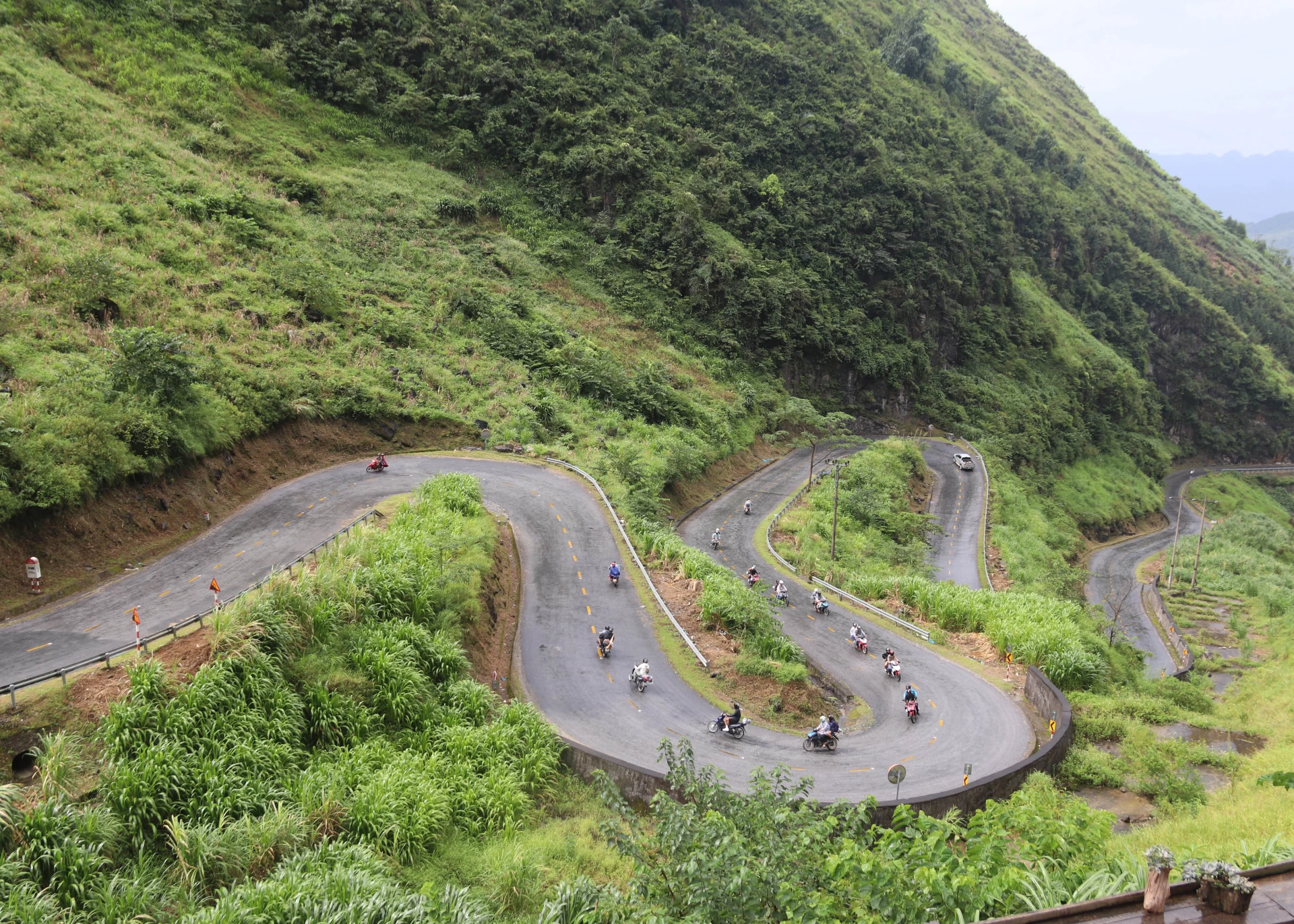
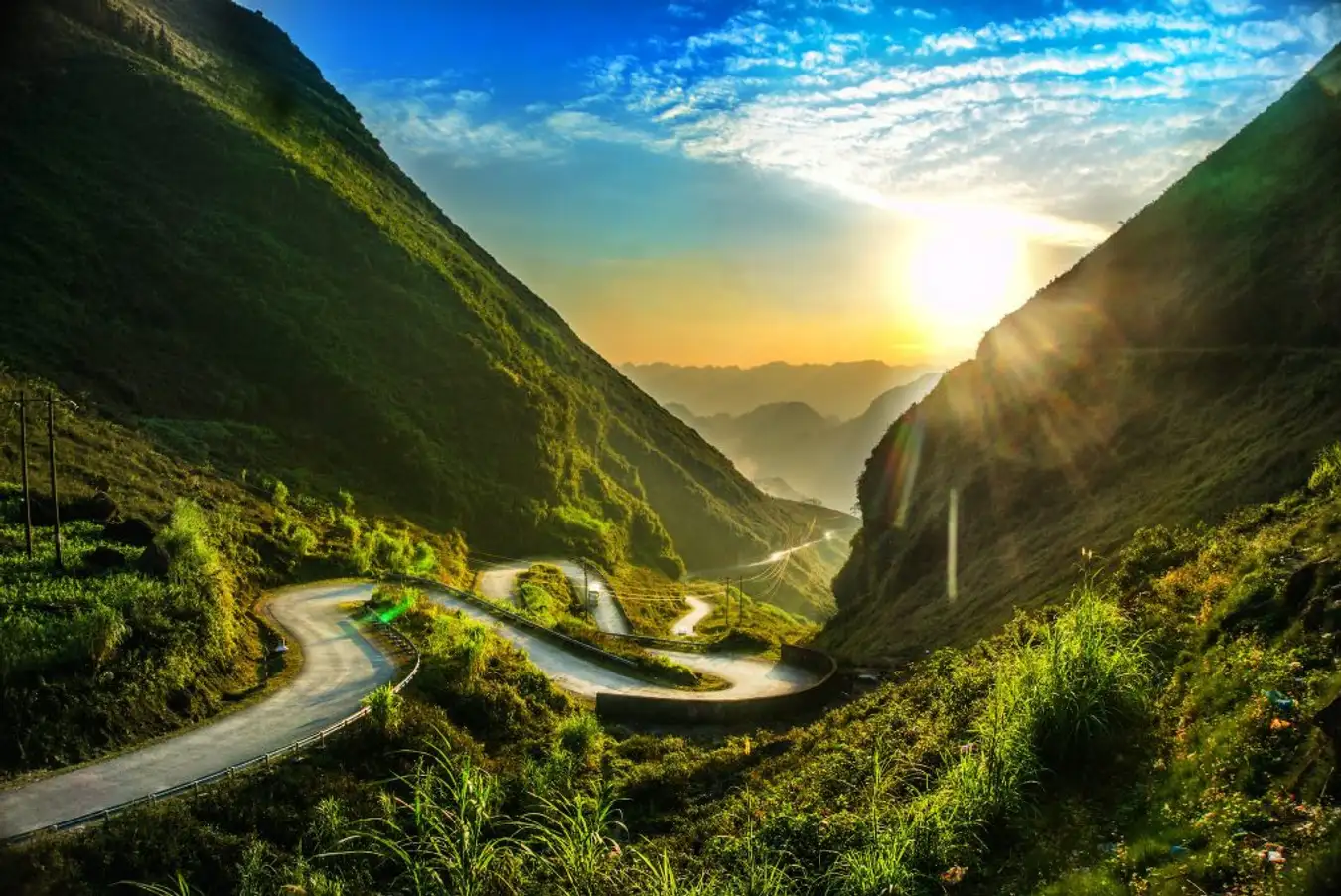
Position yourself on the inner curve of the S-shaped bends where local children often carry flower baskets. This vantage point emphasizes the dramatic elevation gain of these famous Ha Giang landmarks.
Stand near the monument area or the cliff-side edge to photograph the Nho Que River snaking through the deep canyon. Use a wide-angle lens to capture the sheer limestone walls that define this Northern Vietnam adventure.
Ascend the stairs to the base of the tower for a perspective looking out over the border mountains and the village fields. This location provides a clear sightline into the neighboring territory for your 3 day 2 night ha giang loop tour tour.
Navigating the mountain passes requires careful planning for families considering a 3 day 2 night ha giang loop tour. While the region offers vast landscapes, the terrain is rugged and demands high attention to safety for younger travelers.
Strollers are not practical on the steep, winding mountain roads of this Ha Giang expedition. You will need a secure baby carrier to manage the limestone peaks and narrow trails effectively.
This experience is generally recommended for older children or teenagers capable of enduring long hours in a vehicle. Many families find the 3 day 2 night ha giang loop tour tickets are better suited for those with previous experience in remote mountainous environments.
Public restrooms are sparse and basic throughout the rural provinces, so prioritize comfort and readiness for limited infrastructure. Carrying your own sanitizing supplies is essential when booking these 3 day 2 night ha giang loop tour tours.
The journey involves significant time on the road, making frequent breaks necessary for children. Plan your transit within the best arrival window of 07:00–17:00 to ensure your 3 day 2 night ha giang loop tour tour stays within daylight hours for safety.
Finding reliable meals is straightforward when planning your 3 day 2 night ha giang loop tour, as most homestays provide hearty family-style dinners. Beyond these homesteads, small mountain towns offer local markets and cafes perfect for refueling during your Ha Giang Loop journey.
Located in a restored Hmong house, this venue serves traditional buckwheat cakes and local corn wine. It is a quiet spot to rest after long mountain passes.
This local eatery offers standard Vietnamese staples like pho and stir-fried vegetables with rice. It provides a simple, authentic atmosphere for those seeking 3 day 2 night ha giang loop tour tours food.
A perfect stop for strong Vietnamese coffee and light snacks while navigating the terrain. This venue is ideal for travelers needing 3 day 2 night ha giang loop tour tickets or quick route planning advice.
This venue focuses on communal dining, serving hot pot and local meats to groups. Reservations are recommended for those finishing their 3 day 2 night ha giang loop tour tour.
Everything you need to know for your journey
Safety depends on experience; the 'Easy Rider' option is recommended for those without motorcycle skills.
Daylight is essential, so aim to start your daily segments between 07:00 and 17:00.
Access to the road is 0 VND, though individual attractions may have small fees.
Yes, but booking in advance is advised to secure reputable guides and equipment.
Mountain roads can become hazardous; tour operators may adjust the itinerary for safety.
Wear durable, weather-appropriate clothing and protective gear for riding.
While no formal limit exists, the physically demanding nature makes it unsuitable for young children.
Yes, provided you have a valid international license and insurance for the terrain.
Join thousands of happy travelers who have discovered this incredible experience
Book Your Experience Now